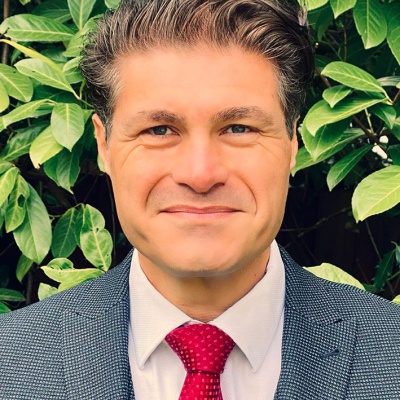
Clinically reviewed by: Professor Ludvic Zrinzo
 Consultant neurosurgeon, National Hospital for Neurology and Neurosurgery
Facial tics, twitching and spasms are common problems seen by neurologists. Whilst they may not necessarily be serious, these spasms can have a significant impact on daily life.
They affect physical appearance and impair confidence, and they can also cause significant discomfort, social distress and, in some cases, problems such as intermittent visual problems, speech or eating/drinking difficulties.
Whether the cause is hemifacial spasm (involuntary twitching on one side of the face), blepharospasm (eye twitching), facial tremor, tics or another facial movement disorder, many people struggle for years without a clear diagnosis or the right treatment.
At UCLH Private Healthcare, we offer a specialist one‑stop service for anyone experiencing facial tics, twitches or spasms, providing expert diagnosis, comprehensive treatment options, and a coordinated multidisciplinary approach - all in one place.
National and global leaders in facial movement disorders
The National Hospital for Neurology and Neurosurgery is internationally known as a centre of excellence for all areas of neuroscience. Our consultants routinely see the largest volumes of hemifacial spasm cases in the UK, making us one of the most experienced centres nationally.
Our facial spasm service is led by internationally recognised specialists with extensive experience in diagnosing and treating facial movement disorders. All our diagnostic and treatment options are evidence-based and grounded in extensive clinical experience.
Our team works side-by-side with other experts across the hospital, ensuring patients benefit from a combined approach to care, rather than fragmented care across separate clinics.
Accurate diagnosis from specialist teams
Conditions such as hemifacial spasm, blepharospasm, facial tics, tremor and other facial movement disorders can look similar but can have a number of underlying causes that require different treatment approaches.
A correct diagnosis is essential for receiving the best treatment.
Our expert team includes:
-
neurophysiologists who diagnose problems like seizures, nerve damage, and muscle disorders
-
neuroradiologists who accurately interpret any scans to diagnose your condition
-
specialist movement disorders neurologists who diagnose and support patients with conditions like Parkinson’s disease, tremor or dystonia
This team has extensive experience in recognising the subtle differences and underlying causes that are often missed by less specialised services.
We welcome individuals seeking a second opinion or clarity about their condition, as in some cases there are other treatment options (including medicines, injections, surgery, therapies) that may still be possible.
One‑stop, integrated care
The National Hospital for Neurology and Neurosurgery offers a streamlined service where patients receive diagnosis, treatment, and follow‑up through a single, connected team.
Our consultants have extensive experience in facial movement disorders and have expertise in providing both clinical and surgical solutions for facial movement disorders.
Botox (Botulinum Toxin) injections remain the most common and effective treatment for many patients with facial movement disorders.
Around half of patients achieve long‑term symptom relief with Botox alone, although treatment typically needs repeating every three to four months.
For patients with hemifacial spasm, whose symptoms worsen or who no longer respond well to Botox, we can offer a surgical option, which can offer significant benefits to appropriate patients.
Patients who have previously been told surgery is not an option may still benefit from a fresh review by our specialist team, particularly where previous imaging may have not identified subtle but relevant changes.
Multidisciplinary support including neuro‑therapy
As well as offering medical and surgical treatment options, patients also find that facial weakness, Bell’s palsy‑related problems, and post‑operative rehabilitation can all benefit from targeted therapy.
Our extended team includes specialist neurotherapists (physiotherapy, occupational therapy, and speech and language therapy) who have the expertise to help patients improve their symptoms.
Where facial movements may result from tics or functional neurological disorders (essentially caused by a wiring malfunction in the brain), we can also involve specialist neuropsychiatrists and neuropsychotherapists who may be able to help.
This integrated team allows us to treat all causes of facial tics and spasms within one coordinated service: something rarely available elsewhere.
Contact UCLH Private Healthcare
To book an appointment, request an imaging review or ask about treatment options, please contact our team via 020 3448 4260. Email uclh.